
"Blue Mountain classification"
500 article(s) found

Coffee grading knowledge how to classify coffee grades
If the owners of two cafes are discussing, shopkeeper A says, "the coffee beans we use in our shop are NO.2 in Santos, Brazil. What about your store?" shopkeeper B said: our store uses Brazilian NO.1 of the same grade as Blue Mountain NO.1. The evaluation method adopted in Brazil is the deduction method, which is classified according to the number of defective beans per 300g of staple beans, with a total of seven grades from NO.2 to No.8, with a deduction of less than 4 points.

NO.1 Jamaica Blue Mountain-Blue Jue Manor Coffee how much is Blue Mountain Coffee what brand is good
Professional coffee knowledge exchange more coffee bean information please follow coffee workshop (Wechat official account cafe_style) Mavis Bank Blue Mountain NO.1, authentic Blue Mountain legal coffee producing area of Jamaica is located in eastern Jamaica, its NO.1 is the highest representative of Jamaican coffee classification, coffee plantations are mainly distributed in the mountains above 5000 feet above sea level.
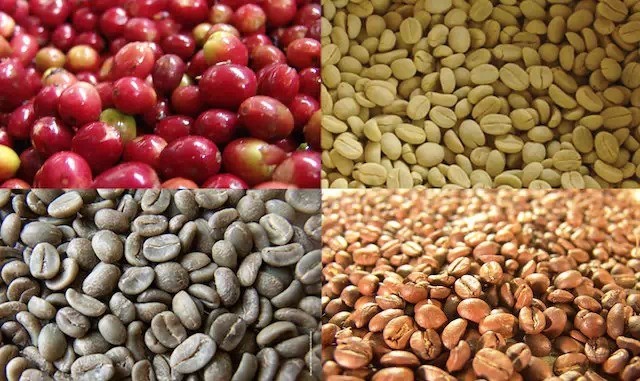
Introduction to Coffee: a detailed introduction to the producing areas and classification of coffee beans
There are mainly two kinds of coffee on the market, such as Coffea Arabica and Coffea Robusta. Each of them can be subdivided into more variety branches. Most of the coffee beans in circulation on the market are distinguished by their origin. The following is a list of some of the major producing countries and their famous coffee: Brazilian coffee fruit (Arabica) Brazil: Santos, Brazil
Arabica Coffee Classification what kinds of Arabica coffee beans are there and how much is Arabica?
Professional coffee knowledge exchange more coffee bean information please pay attention to the coffee workshop (Wechat official account cafe_style) Arabica species account for 70% of all coffee production, is the most important commercial coffee beans. Arabica coffee beans were introduced into Europe from the Arab region and can be divided into Tibika species and bourbon subspecies according to their different places of introduction. In addition, through genetic mutation and heterozygosity
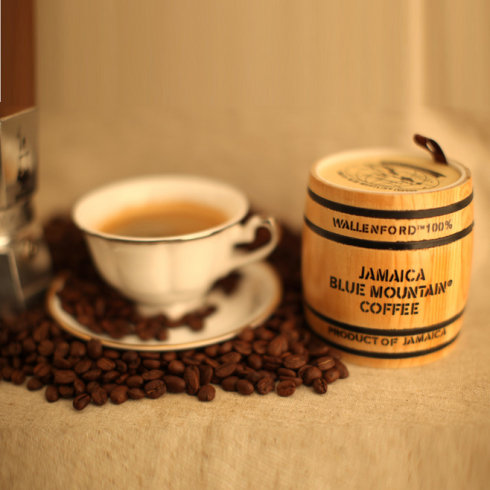
WALLENFORD- Jamaica Blue Mountain Coffee Development era
In 1728, coffee was first introduced into Jamaica. Due to the suitable soil, climate, light and other conditions in Jamaica, the quality of coffee was excellent. Andrews expanded to other areas; in 1737, Jamaican coffee production reached 83000 pounds per year; over the next 40 years, numerous private landowners appeared, until 1800, when there were 686coffee farms in Jamaica.

Superior Blue Mountain Coffee Region St. Thomas Region Wallenford Manor
Blue Mountain Coffee is one of the world's most Jamaica weather, geological structure and topography combine to provide the ideal location. Ridges running through Jamaica extend to the east of the island, and the Blue Mountains rise to more than 2100 meters. The weather is cool, foggy and rainy frequently. Use this rich soil to harmonize with rainwater. Here, coffee trees are grown using a mixed cropping method, with banana trees and avocado trees in terraces.
Blue Mountain Coffee has a high requirement for the proportion of defective beans, which gives priority to the grading system of giving priority to defects.
Introduction: although the output of Blue Mountain Coffee is very small, it has a strict grading system. Even if it is produced in the legal Blue Mountain producing area, it should be graded according to the size of beans and the proportion of defects. BlueMountainNo.1 Blue Mountain No. 1 bean type: 96% above 17 Bl 18 eyes defective bean proportion: 2% BlueMountainNo.2 Blue Mountain 2 bean type: 96% above 16 inch defective bean proportion: 2% Bl

Hawaii Kona Kona Coffee introduces flavor description variety classification
Exchange of professional baristas Please pay attention to the most expensive coffee on the market in the coffee workshop (Wechat official account cafe_style): Kona Coffee, however, Kona Coffee is still one of the most expensive coffee on the market. According to Hawaiian Agriculture Department regulations, only coffee on the slopes of Hualalai and Mauna Loa in Big Island, Kona can be called Kona Coffe.

[practical information] how are coffee beans screened and graded?
Communication of professional baristas Please pay attention to the grading of coffee in the coffee workshop (Wechat official account cafe_style). If the owners of two cafes are discussing, owner A says: the coffee beans we use in our shop are NO.2 in Santos, Brazil. Where is your shop? B the shopkeeper said: our store uses Brazilian NO.1 of the same level as Blue Mountain NO.1. The evaluation method adopted in Brazil is the deduction method, according to every 300 grams.
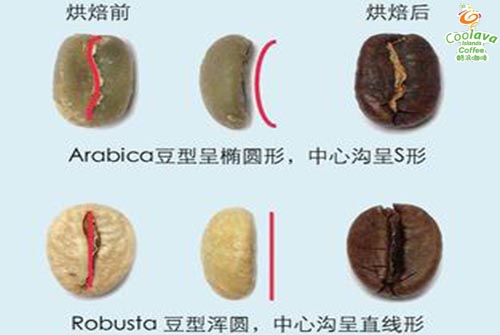
Boutique coffee beans: details of Arabica and the difference between Arabica and Robusta
Arabica Coffee Coffee Arabica many people have seen roasted coffee beans, but unless you have lived or traveled to coffee producing areas, you may not know coffee trees. The saplings are short-trimmed, but when they mature, they are 30 feet tall and covered with waxy leaves that grow symmetrically in dark green. The coffee fruit grows along the branches. After the white flowers are in full bloom and pollinated, the fruit takes a year to ripen.
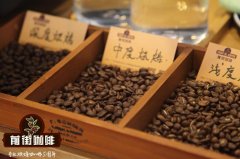
The grading system of authentic Blue Mountain Coffee how much is a cup of Blue Mountain Coffee
Professional coffee knowledge exchange more coffee bean information please follow the coffee workshop (Wechat official account cafe_style) Blue Mountain coffee why is it so expensive do we drink the true blue mountain BlueMountainNo.1 Blue Mountain 1 bean type: 96% more than 17 BlueMountainNo.2 18 eyes defective bean proportion: 2% blue mountain 2 bean type: 96% above 16 BlueMountainNo.2 17 eye defective bean proportion: 2 BlueMou

Characteristics of distribution and flavor description and classification of coffee beans in Hawaii
For professional baristas, please pay attention to the coffee workshop (Wechat official account cafe_style) the following are the flavors of the main producing areas: KAU features: fresh and multiple fruit flavors, with cherry, strawberry and passion fruit flavors like red wine, smooth with cinnamon clove, cedar and a finish of syrup chocolate. KONA producing area features: rich fruit aroma, slightly cherry, chocolate
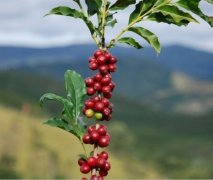
Classification of high-quality coffee beans types of coffee beans from all over the world
When you drink coffee, do you notice what kind of coffee beans are ground? There are many varieties of coffee beans with different tastes. At present, most of the coffee beans on the market are distinguished by their origin. Some of the major producing countries and their famous coffee are listed below, and there are professional coffee companies in many countries that roast and grind their own coffee beans and pack them into brand coffee.
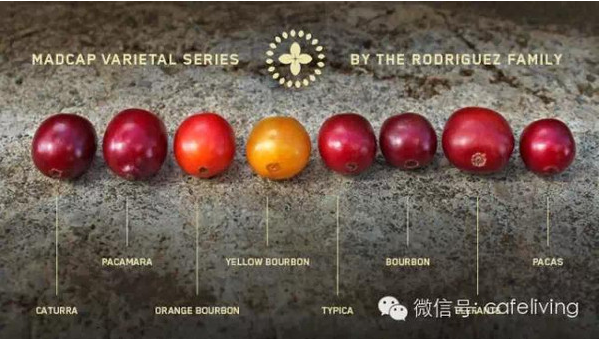
Arrangement of hematemesis among members of Arabica coffee bean family
It has always been a complicated matter to classify coffee genetically. As far as the coffee varieties on the market are concerned, the most superficial classification is of course divided into Arabica and Robusta (hereinafter referred to as radish beans). The difference between Arabica and radish beans can be understood by following Wechat cafeliving's reply to fish balls, and the editor will not repeat them here. Today, let's mainly talk about

How many kinds of Arabica coffee beans are there?
Professional coffee knowledge exchange more coffee bean information Please note that the coffee workshop (Wechat official account cafe_style) is also a member of Arabica, why are some coffee beans so expensive? It has always been a complicated matter to classify coffee genetically. As far as the coffee varieties on the market are concerned, the most superficial classification is, of course, Arabica and Rob.

Classification criteria of coffee bean varieties and flavor characteristics of coffee beans flavor characteristics of iron pickup coffee beans and Arabica coffee beans
Professional coffee knowledge exchange more coffee bean information please follow the coffee workshop (Wechat official account cafe_style) Blue Mountain Coffee: producing country (Jamaica) Blue Mountain Coffee is produced in Jamaica, a tropical island in the Caribbean Sea, produced in Jamaica's Blue Mountains above 2500 feet above sea level.

Do Jamaican boutique Blue Mountain Coffee beans introduce authentic Blue Mountain Coffee from St. Thomas?
Jamaica means the island of springs in the language of the Indian Arawak, where the Indian Arawak reached the pinnacle of their stone civilization. Under the influence of smallpox and massacres brought by the Spanish colonists, the Arawak people gradually died out, leaving less than 30%.

A brief introduction to the producing area of Jamaica Blue Mountain Grade 1 Coffee and the grading of raw beans and raw beans in Jamaica Blue Mountain Garden
Jamaica Blue Mountain Mavis bank Grade 1 raw beans. Because of its superior geographical and climatic conditions, Blue Mountain Coffee is superior to others in taste and aroma. The unique flavor of Jamaica Blue Mountain Mavis bank Grade 1 raw bean Blue Mountain Coffee is related to the geographical location and climatic conditions of the Blue Mountain. Generally speaking, south of the Tropic of Cancer and north of the Tropic of Cancer, this area
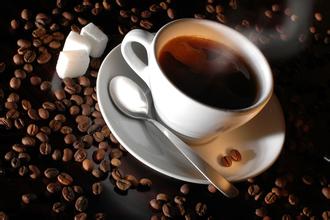
How much does Blue Mountain Coffee cost? How much does it taste?
However, there are also many problems in the cultivation of Vietnamese coffee. The disorderly cultivation of the people leads to serious environmental pollution. In addition, frequent natural disasters also affect the quality of Vietnamese coffee. Unlike vietnam's development model, blue mountain coffee produces only 2400 tons a year, but it is extremely expensive.

Introduction to the characteristics of Jamaican boutique coffee beans, blue mountain coffee flavor and taste manor
Boutique coffee (specialty coffee) is also called specialty coffee selection coffee. It refers to coffee made from a small number of raw beans with excellent taste grown in an ideal geographical environment. Depending on the special soil and climatic conditions in which they grow, they have outstanding flavor. After strict selection and classification, this kind of coffee is hard in texture, rich in taste and stylish.